San Carlos
Too short2,621 ft available5,601 ft needed here
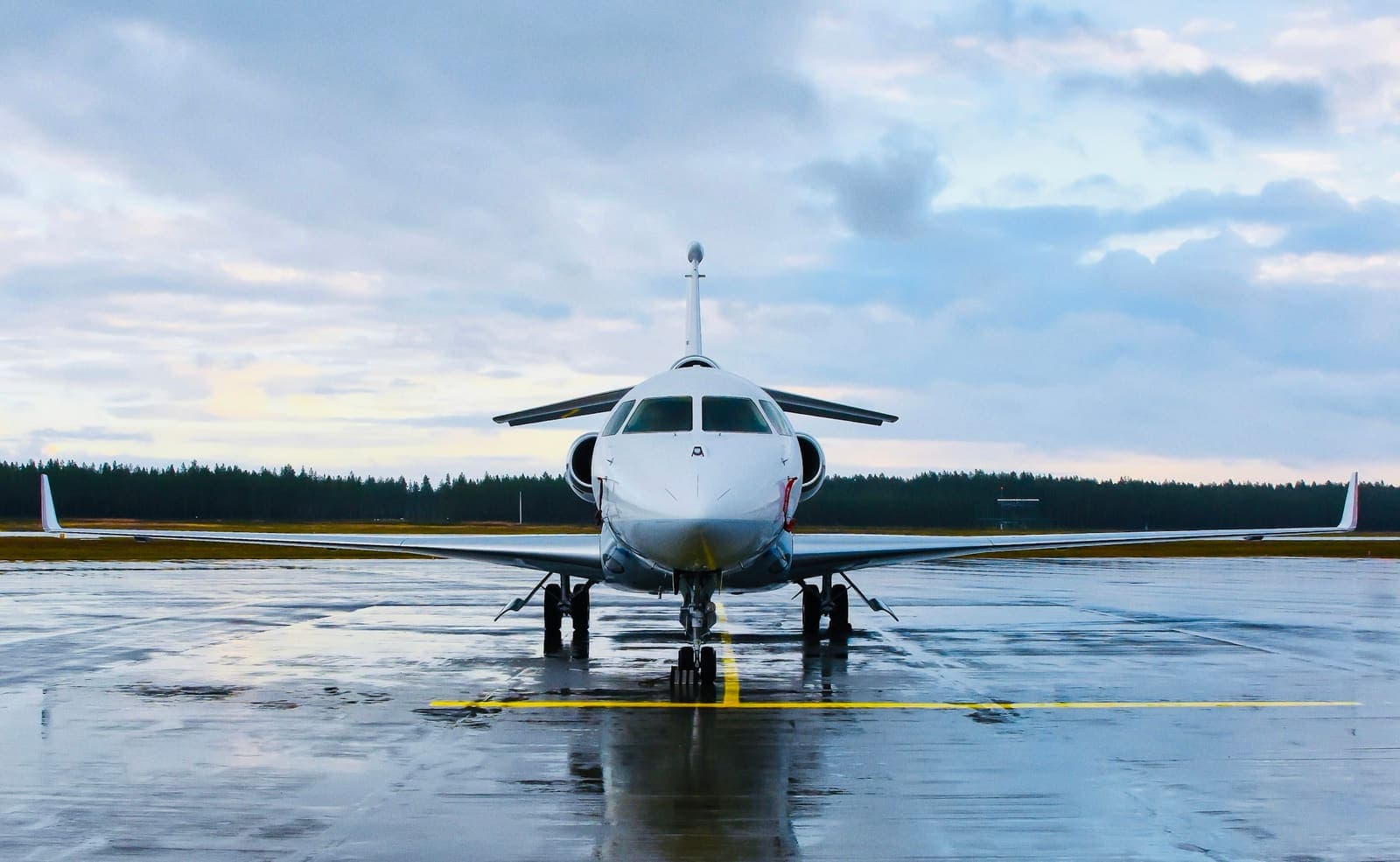
Gulfstream · Heavy jet
Specifications
Manufacturer-published figures for a typical configuration. Individual aircraft vary with model year, interior fit and optional equipment, and runway requirements move considerably with altitude, temperature and weight — the operator's own performance data governs every trip.
Our read
Around 5,600 ft of runway required, and higher fuel burn than newer designs.
We publish the downside because you would find it anyway, and because we do not own this aircraft — there is no reason for us to oversell it.
Range in practice
Great-circle distances with block times computed from this aircraft's 476 kt cruise plus a taxi allowance.
Runway
The Gulfstream G450 needs about 5,600 ft at sea level, which clears 934 of the 2,746 US fields we publish. Thin air needs more of it — roughly 3% per 1,000 ft of elevation — so the demanding fields below are worked out at their own altitude, not at sea level.
2,621 ft available5,601 ft needed here
6,300 ft available6,684 ft needed here
8,006 ft available6,914 ft needed here
7,000 ft available6,532 ft needed here
5,001 ft available5,709 ft needed here
7,550 ft available6,493 ft needed here
6,501 ft available6,019 ft needed here
5,350 ft available5,603 ft needed here
9,000 ft available6,700 ft needed here
5,504 ft available5,611 ft needed here
Indicative, and not a performance calculation. Real balanced field length depends on temperature, weight, runway slope and the day — and it is the operator who signs for it. Treat this as the question to ask, not the answer.
Questions
Typically 12–14 in a charter configuration. Exact seating varies by operator, since interiors differ between individual aircraft — we confirm the layout of the specific tail before you accept a quote.
Published range is about 4,350 nautical miles at 476 knots. Real-world range is lower with a full cabin, strong headwinds or hot-and-high departures, which is exactly the kind of thing we check before proposing it for your trip.
Around 5,600 ft at sea level on a standard day near maximum weight. Altitude, temperature and weight change this significantly — the operator's performance data is what governs whether it can use your airport.
We publish an indicative market range for this cabin class ($7,000–$13,000 per hour) so you can size the trip, not a firm rate for this aircraft — the real number depends on where the aircraft is positioned, the season and the airports, which is why we source your specific trip. Altessair adds a disclosed brokerage fee to the operator's price, shown as a separate line on every quote.
Comparable aircraft
Dassault
Three engines, fly‑by‑wire, and nearly 6,000 nm — a heavy jet with ultra‑long‑range legs.
$7,000–$13,000per hour · heavy jet class range, indicative
Dassault
The three‑engine Falcon — unusually short‑field capable for a heavy jet, and famously efficient.
$7,000–$13,000per hour · heavy jet class range, indicative
Dassault
A wide‑cabin heavy jet that lands in under 4,700 ft — rare access for this much aircraft.
$7,000–$13,000per hour · heavy jet class range, indicative
Cessna
The fastest civilian aircraft in production for years — genuinely time‑saving on long domestic legs.
$7,000–$13,000per hour · heavy jet class range, indicative