Airports
Why Your Jet Can't Land at Aspen
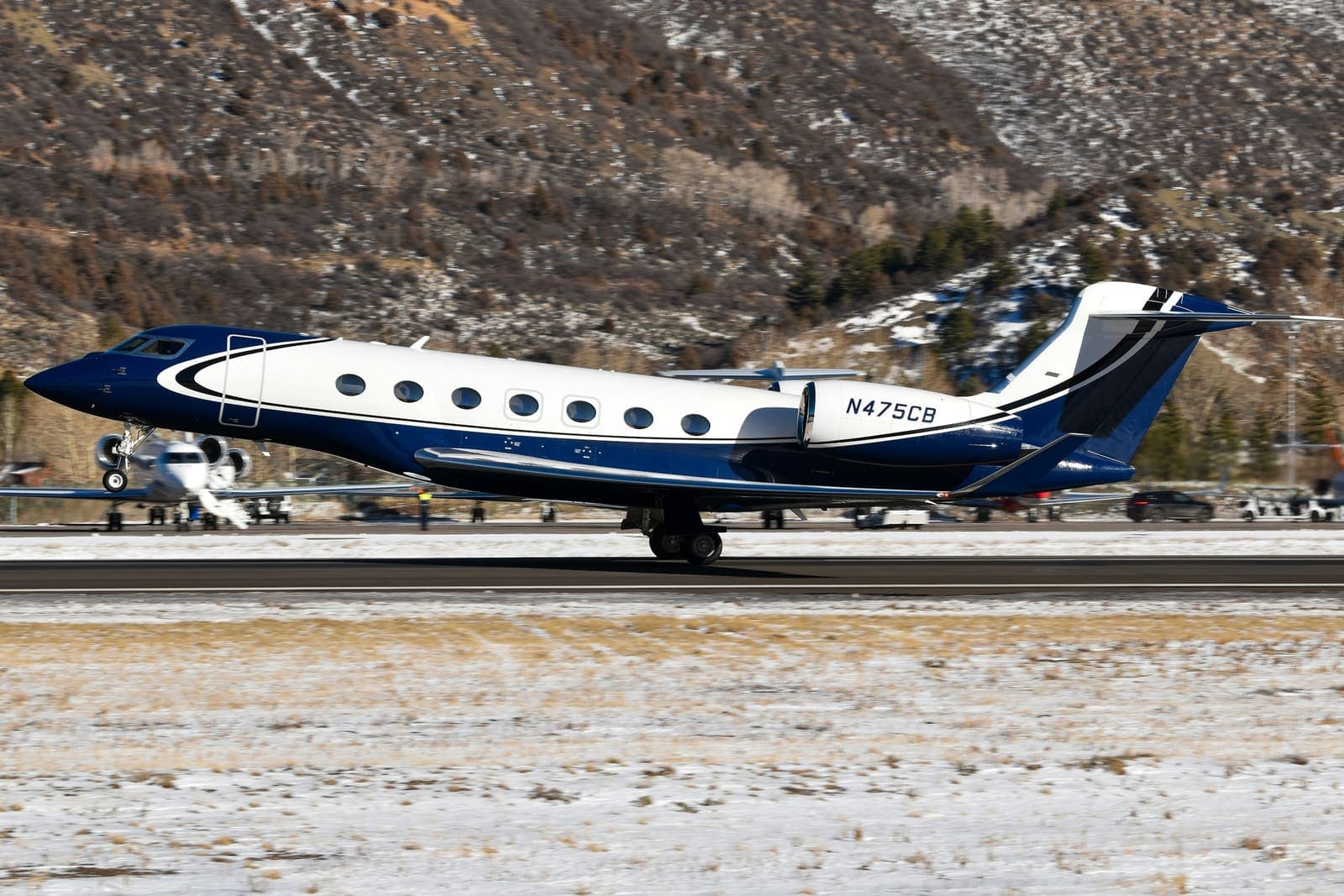
Aspen's runway is 8,006 feet long — longer than plenty of airports that take heavy jets all day. And yet every winter, brokers have the same conversation: the aircraft a client wants cannot go there, or can only go there light on fuel and passengers. The runway isn't the problem. The altitude is.
Altessair · August 20, 2026 · 2 min read
Thin air needs more runway
An aircraft's published field length — the runway it needs to take off or land — is measured at sea level. Aspen-Pitkin County sits at 7,820 feet of elevation, where the air is roughly a quarter thinner. Thinner air means the wings make less lift and the engines make less thrust at any given speed, so everything happens faster along the ground and the aircraft needs more pavement to do it.
A common rule of thumb, and the one our airport pages use, is roughly three percent more runway per thousand feet of field elevation. It is deliberately conservative and it is only a screening tool — real performance depends on temperature, weight, wind and the day, and it is the operator who signs for it — but it is enough to sort aircraft into 'worth asking about' and 'not this trip.'
Worked example: the same jet at two mountain fields
Take the Bombardier Global 7500, which needs about 5,800 feet at sea level. At Aspen's elevation, our screening model puts its requirement around 7,160 feet — against 8,006 available. Tight, but the runway is there.
Now take Jackson Hole: 6,300 feet of runway at 6,451 feet of elevation. The same model puts the Global 7500's requirement around 6,900 feet — more runway than the airport has. Same aircraft, same brochure, one mountain resort it can serve and one it cannot. Nothing on a spec sheet warns you about this; you have to run the numbers per field.
Meanwhile a Citation M2, which needs about 3,210 feet at sea level, clears both airports with room to spare — needing roughly 3,960 feet at Aspen. Smaller aircraft are not just cheaper into the mountains; they are often the only honest answer.
Summer is worse than winter
Counterintuitively, the hardest days at mountain airports are hot July afternoons, not snowy January mornings. Heat thins air the same way altitude does — pilots combine the two into 'density altitude' — so a 90-degree afternoon at Aspen behaves like an airport several thousand feet higher still. Operators respond by capping weight: fewer passengers, less fuel, or a technical stop to top up somewhere lower.
What to do with this
If your destination is a mountain or short-field airport, tell your broker before you fall in love with a cabin. The right sequence is airport first, aircraft second. Every airport page on this site shows which of the types we publish can use the field at its own elevation — and every aircraft page shows the demanding fields it can and cannot serve — precisely so this conversation happens before the quote, not after the booking.